The CBAM 50-Tonne Threshold: Who Is Really Exempt, and How to Avoid Crossing It by Accident
The CBAM 50-Tonne Threshold: Who Is Really Exempt, and How to Avoid Crossing It by Accident
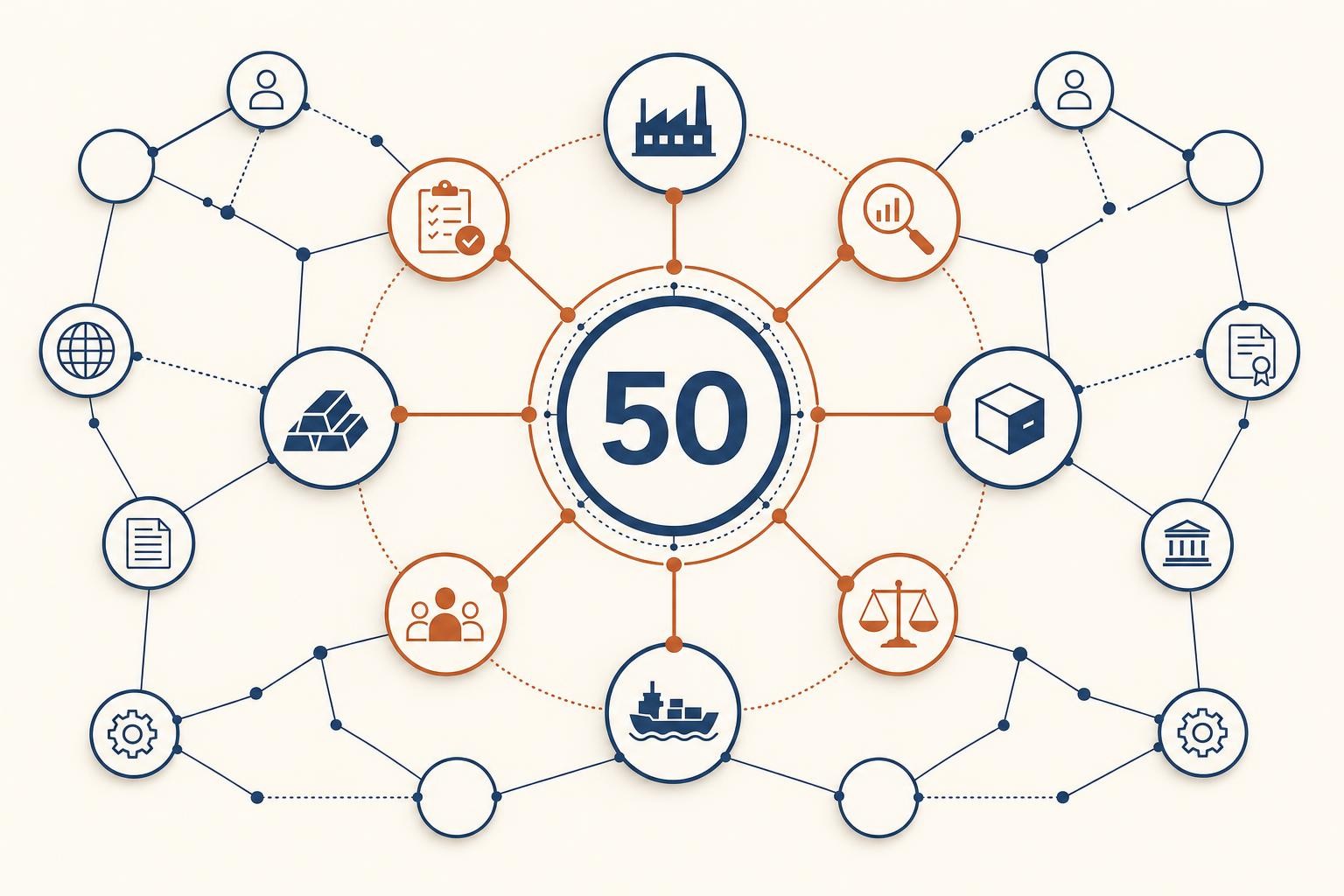
The omnibus simplification of the Carbon Border Adjustment Mechanism replaced the old per-consignment value test with a single annual mass threshold: 50 tonnes of CBAM goods per importer, per calendar year. It is the most important exemption in the definitive regime, and also the one most likely to be misread. Below the line you are largely out of CBAM. Above it, you need authorisation, data, declarations and certificates.
What the threshold actually is
According to Cassidy Levy's summary of the final omnibus, the threshold is 50 tonnes of CBAM goods per year, applied per CBAM declarant, and it replaces the earlier EUR 150-per-consignment threshold. The same source says it was designed to capture about 99% of embedded emissions while excluding about 90% of importers.
The counting rule matters more than the number. As quoted by Tanso, the threshold applies to the total weight of all goods of all CN codes, aggregated per importer and per calendar year. You do not get 50 tonnes of steel plus 50 tonnes of aluminium plus 50 tonnes of fertiliser. You get 50 tonnes in total.
The threshold counts weight, not emissions or value. A small tonnage of a very carbon-intensive product still counts toward the same 50 tonnes as a large tonnage of a low-intensity one.
Who is exempt, and who is not
The threshold applies to cement, iron and steel, aluminium and fertilisers. Electricity and hydrogen have no threshold at all, so any import of either requires an authorised declarant (Tanso).
Below 50 tonnes the goods are still CBAM goods, but the importer needs no declarant authorisation and no CBAM declarations or certificates (Cassidy Levy). In customs declarations, low-volume imports below the threshold are flagged with exemption code Y137 (Tanso).
Two groups are not protected the way you might assume:
- Customs representatives. Cassidy Levy notes that representatives acting as declarants must be authorised even if the importer they act for stays below 50 tonnes.
- Importers who cross the line without authorisation. The same source reports that importing without authorisation attracts penalties of three to five times the regular level.
Five ways importers cross the threshold by accident
- Aggregating by product, not by importer. Teams that track each CN code separately never see the combined total.
- Several entities, no group view. The threshold is per importer. If your group has multiple importing entities, each is counted on its own, but a broker or representative may be pulling consignments together. Map who is the importer of record on every shipment.
- Mid-year growth. A single large spot purchase can take a small importer over the line in one shipment. The sources reviewed for this article do not say what happens to the earlier part of the year once the threshold is exceeded, so confirm treatment with your national CBAM authority before relying on a "start counting from the crossing date" assumption.
- Electricity and hydrogen. These sit outside the threshold entirely.
- Broker declarations. If your customs broker acts as declarant, their authorisation obligations apply regardless of your tonnage.
A simple threshold tracker
Identify each legal entity that appears as importer of record on customs declarations.
Export net mass in tonnes for every CBAM-covered CN code from customs data.
Sum all CBAM CN codes together. Do not split by product.
Alert at around 70 to 80% of 50 tonnes so procurement can act before a large order tips you over.
If you expect to cross, start the authorisation and supplier data process now rather than after the shipment arrives.
Why it matters for the timeline
For importers above the threshold, certificates for 2026 imports can only be bought from February 2027, at the average ETS price for the quarter of importation, and the annual declaration deadline moves to 30 September, according to Cassidy Levy. The same source reports that importers who registered as declarants before 31 March 2026 can keep importing above the threshold while their authorisation is pending. Starting the process late is where the penalty exposure sits.
Even below the threshold, EU buyers of your goods may still ask for emissions data, because their own position can depend on your tonnage and your suppliers' data. Treat the exemption as a legal position, not a reason to stop collecting information.
Is the 50-tonne threshold per product or in total?
In total. It applies to the combined weight of all CBAM goods under all CN codes, per importer and per calendar year.
Do electricity and hydrogen imports count toward the threshold?
No. Electricity and hydrogen have no threshold and always require an authorised declarant.
If I stay under 50 tonnes, are my goods still CBAM goods?
Yes, but you need no declarant authorisation, declarations or certificates.
Does my customs broker need authorisation if I am under the threshold?
A customs representative acting as declarant must be authorised even if the importer stays below 50 tonnes.
What happens if I exceed 50 tonnes without authorisation?
Reported penalties for unauthorised importing are three to five times the regular level. Check the exact amounts with your national authority.
Sources reviewed: Cassidy Levy and Tanso. This article is general information, not legal advice.
Related reading
What the US Asked the EU to Change in the CSDDD Guidelines, and What It Means for Non-EU Companies
In August 2026 the US government sent the Commission detailed comments on the CSDDD guidelines. Here is what it asked for, which asks are likely to be contested, and what non-EU companies should plan for before the guidelines land in Q1 2027.
The Steel Importer's Triple Stack: CBAM, the 50% Quota Duty and Melt-and-Pour Evidence
Steel importers now face three overlapping EU regimes: CBAM certificates, a 50% duty on out-of-quota volumes, and mandatory melt-and-pour evidence. Here is how they interact and what to fix before October 2027.
CBAM Penalties Explained: The Two Tiers, the EUR 100 Base Rate, and What Non-Compliance Really Costs
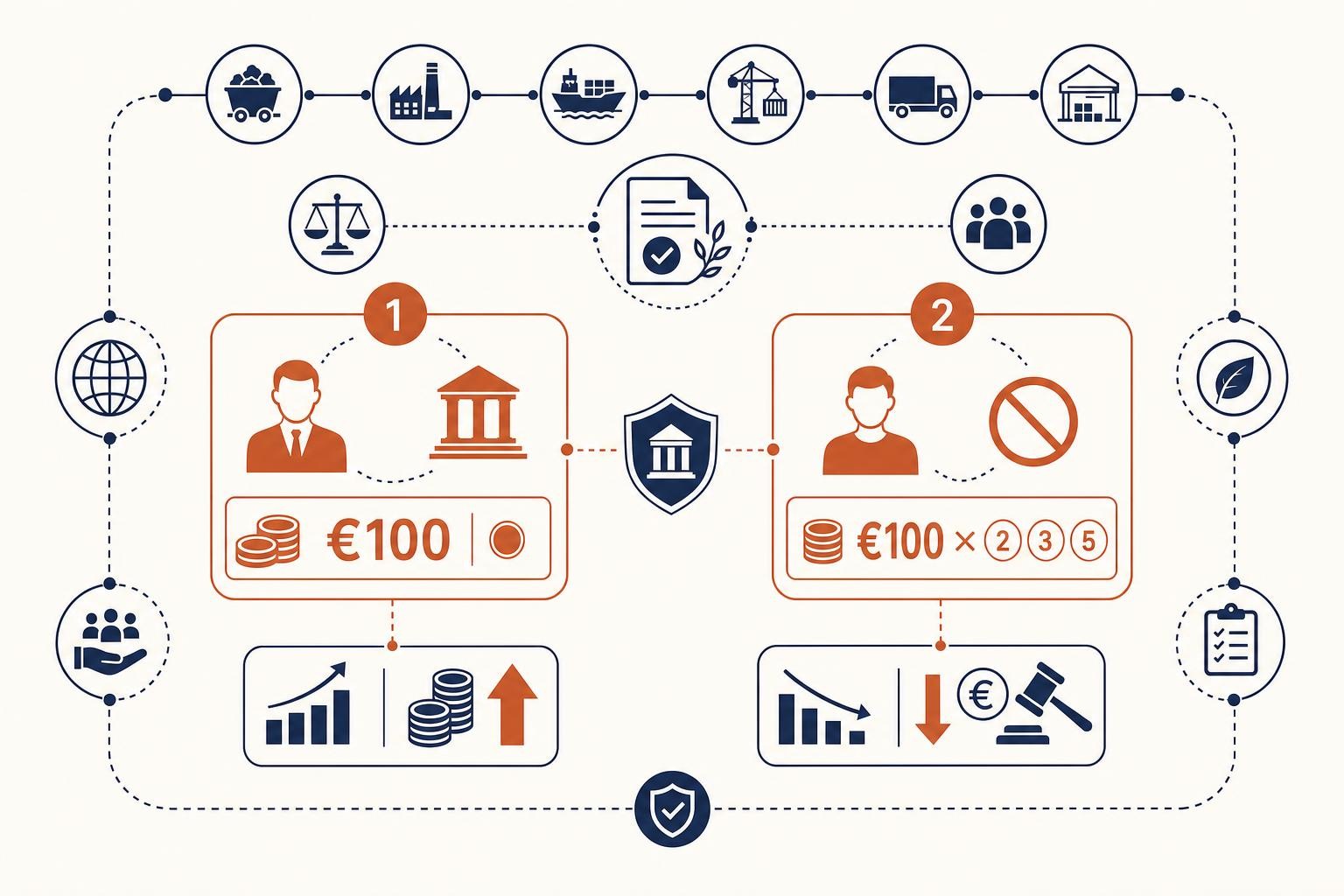
CBAM penalties come in two tiers: EUR 100 per uncovered certificate for authorised declarants and three to five times that for unauthorised importers. Here is how each is calculated and how to avoid them.