CBAM Downstream Extension Heads to Trilogue: Commission, Council and Parliament Positions Compared
CBAM Downstream Extension Heads to Trilogue: Commission, Council and Parliament Positions Compared
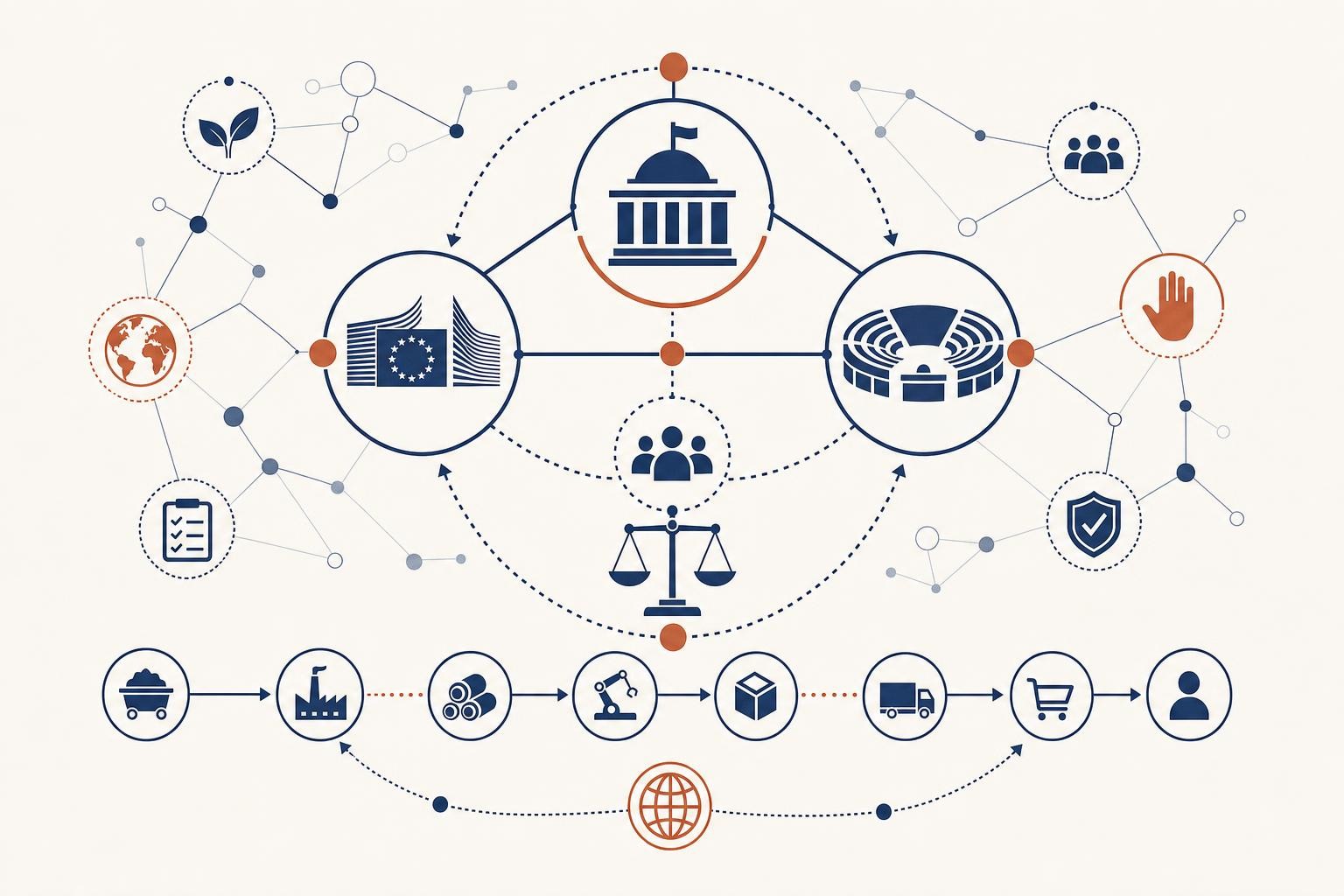
The proposal to extend the Carbon Border Adjustment Mechanism to downstream goods has reached the decisive stage. As of early October 2026, all three EU institutions have set their positions and technical trilogue work is underway per Mayer Brown. If you import screws, wire, tubes, metal furniture or other steel- and aluminium-intensive goods, the outcome decides whether you become a CBAM declarant in 2028.
How we got here
The Commission proposed the extension and tighter anti-circumvention rules on 17 December 2025. The Council agreed its general approach on 12 June 2026, and Parliament adopted its mandate in plenary on 15 September 2026 (Mayer Brown). The first formal trilogue is scheduled for 20 October 2026 during the Strasbourg plenary, with a second and final one provisionally on 30 November. The stated goal is political agreement before the end of 2026.
The three positions side by side
| Issue | Commission | Council | Parliament |
|---|---|---|---|
| Downstream product types | About 180 | About 200 | 457 in the text (comparison table lists about 453) |
| Aluminium de minimis | 50 tonnes | 50 tonnes | 5 tonnes net mass for aluminium products |
| Scrap | Pre-consumer steel and aluminium scrap count as precursors; post-consumer excluded | Same as Commission | All aluminium scrap counts, with a single default for unwrought aluminium; pre-consumer steel scrap reported but not counted |
| Article 27a temporary exemption | Temporary removal of goods in case of severe internal market harm | Kept, with objective criteria such as a sustained price rise above 50% over six months | Deleted; revenues redirected to affected sectors instead |
Parliament's text is the widest. Its figure of 457 product types is not consistent with the roughly 453 in its own comparison table, so check the adopted text before building a product list around either number.
The aluminium threshold is the practical flashpoint
The 50-tonne mass-based de minimis exemption is what keeps many small importers out of CBAM. Parliament would cut it to 5 tonnes for aluminium products, which would pull in a large group of smaller importers. If you buy aluminium components in modest volumes, model your exposure at both thresholds now. Our earlier guide to the 50-tonne exemption explains the all-or-nothing trap.
Anti-circumvention gets sharper
All three texts tighten the rules, but they define the target differently:
- Commission: any actor that unduly avoids CBAM liability, plus artificial supply-chain adjustments to obtain lower default values.
- Council: limited to operators, importers and authorised declarants, with rules on harmful resource shuffling. Declarants must prove no such shuffling occurred for high-risk goods and origins.
- Parliament: expressly covers resource shuffling and goods slightly processed to fall outside scope. It would also let the Commission identify high-risk country and product combinations, with country-level default values applying from the outset.
For importers, the common thread is documentation. If you move sourcing between origins, keep the commercial rationale on file. See also our piece on resource shuffling.
Other Parliament-only additions
Parliament would require online platforms designated as importers for distance sales to become authorised CBAM declarants, and would treat artificial transaction splitting to stay under the de minimis as retroactive liability. It also asks the Commission to assess extending CBAM to chemicals and petrochemicals, and says trade agreements cannot exempt declarants unless they provide for EU ETS linking (Mayer Brown).
Nothing here is law yet. The trilogue outcome could land anywhere between the three texts. Plan for the widest scope and lowest threshold, and relax only once the agreed text is published.
What to do before 20 October
List imported goods that appear in any of the three downstream lists, not only the Commission's.
Compare annual net mass of aluminium products against 50 and 5 tonnes.
Ask suppliers how they report pre- and post-consumer scrap.
Record the commercial reason for any shift in origin or production site.
FAQ
When would downstream goods enter CBAM?
The Commission's proposal was framed around 2028. The final date depends on the trilogue outcome.
Is the trilogue date fixed?
The first trilogue is scheduled for 20 October 2026, and a second one is provisionally set for 30 November. Both dates could move.
Does this change my 2026 obligations?
No. Current obligations for the six existing sectors are unchanged by the proposal.
Related reading
What the US Asked the EU to Change in the CSDDD Guidelines, and What It Means for Non-EU Companies
In August 2026 the US government sent the Commission detailed comments on the CSDDD guidelines. Here is what it asked for, which asks are likely to be contested, and what non-EU companies should plan for before the guidelines land in Q1 2027.
The Steel Importer's Triple Stack: CBAM, the 50% Quota Duty and Melt-and-Pour Evidence
Steel importers now face three overlapping EU regimes: CBAM certificates, a 50% duty on out-of-quota volumes, and mandatory melt-and-pour evidence. Here is how they interact and what to fix before October 2027.
EU Carbon Import Thresholds: Who Is Truly Exempt Under the CBAM 50-Tonne Rule - and How Importers Cross It by Accident
The CBAM 50-tonne de minimis exempts ~90% of importers - but the aggregation rules, broker obligations, and group-entity traps catch many by surprise. Here's exactly how it works.