Your CBAM Authorisation Application Is Still Pending: What the Provisional Regime Protects, and What Happens if You Are Refused
The deadline for applying to become an authorised CBAM declarant was 31 March 2026. If you applied by then and are still waiting for a decision, you are relying on a transitional provision. This article explains what it covers, what it does not, and how to prepare for the possibility of a refusal.
Who needed to apply
According to Germany's DEHSt, authorisation is required for indirect customs representatives regardless of volume, for importers bringing in more than 50 tonnes of CBAM goods a year, and for all importers of electricity and hydrogen. Importers of cement, iron and steel, fertilisers and aluminium below 50 tonnes a year do not need it. For the mechanics of that threshold, see our 50-tonne de minimis guide.
What the provisional regime protects
Under the transitional provision in Article 17(7a), importers above the threshold who lack authorisation may continue importing while their decision is pending, provided they submitted an application by 31 March 2026. Goods imported this way are declared with TARIC code Y238.
Processing time limits apply: up to 120 days for applications submitted after 15 June 2025, and up to 180 days for earlier ones. An application filed at the end of March should therefore have reached a decision window by now, so a long silence is worth chasing with your national authority.
What a refusal means
The protection is conditional. If the application is rejected, penalties apply under Article 26(2) and (2a) of the regulation. Treat a refusal as a compliance event, not an administrative setback: imports made without authorisation after a rejection expose you to the penalty regime described in our CBAM penalties guide.
What authorities look at
Per DEHSt, applicants must show:
- no serious or repeated infringements of customs, tax or market-abuse rules in the past five years;
- financial and operational capacity, supported by three years of audited accounts;
- a valid EORI number and an establishment in the EU;
- a tax authority certificate less than three months old.
A security deposit, in the form of a first-demand bank guarantee from an EU financial institution, is required only if you were not continuously established in the two years before applying. Because the tax certificate expires, an application that has been open for months may need refreshed documents if the authority asks.
Contingency plan while you wait
- Confirm the status of your application and the expected decision date with the competent authority.
- Refresh the tax certificate and financial documents so they are ready on request.
- Model the cost of routing imports through an authorised indirect customs representative or another authorised declarant if you are refused; our article on who carries the declarant obligation covers the split of responsibilities.
- Review contracts and Incoterms that assume you are the declarant; see how your Incoterm decides who pays CBAM.
- Keep clean import records from the first shipment, since authorities can review them.
FAQ
Can I keep importing while my application is pending? Yes, if it was submitted by 31 March 2026 and you exceed the threshold, under the Article 17(7a) transitional provision.
Do I need a guarantee? Only if you were not continuously established during the two years before you applied.
Where do I apply? With the competent authority in your member state, through the CBAM Registry. In Germany that is DEHSt.
Sources: DEHSt: Authorisation for the CBAM definitive regime; European Commission: CBAM definitive regime.
This article is general information, not legal advice. Procedures vary by member state.
Related reading
The CBAM Verifier Bottleneck: Why Booking a Slot in Late 2026 Is the Real Compliance Decision
Verifier availability - not data quality - is the binding constraint on using actual embedded emissions for 2026 CBAM imports. Here's the arithmetic, the third-country gap, and what to do in Q4 2026.
The CSDDD Guidelines Are Where Compliance Is Actually Decided - Here's What to Build Before Q1 2027
The Commission's CSDDD implementation guidelines land in Q1 2027 - a year before transposition. They set the evidentiary standard, not the directive. Here's what is unresolved and what to build now.
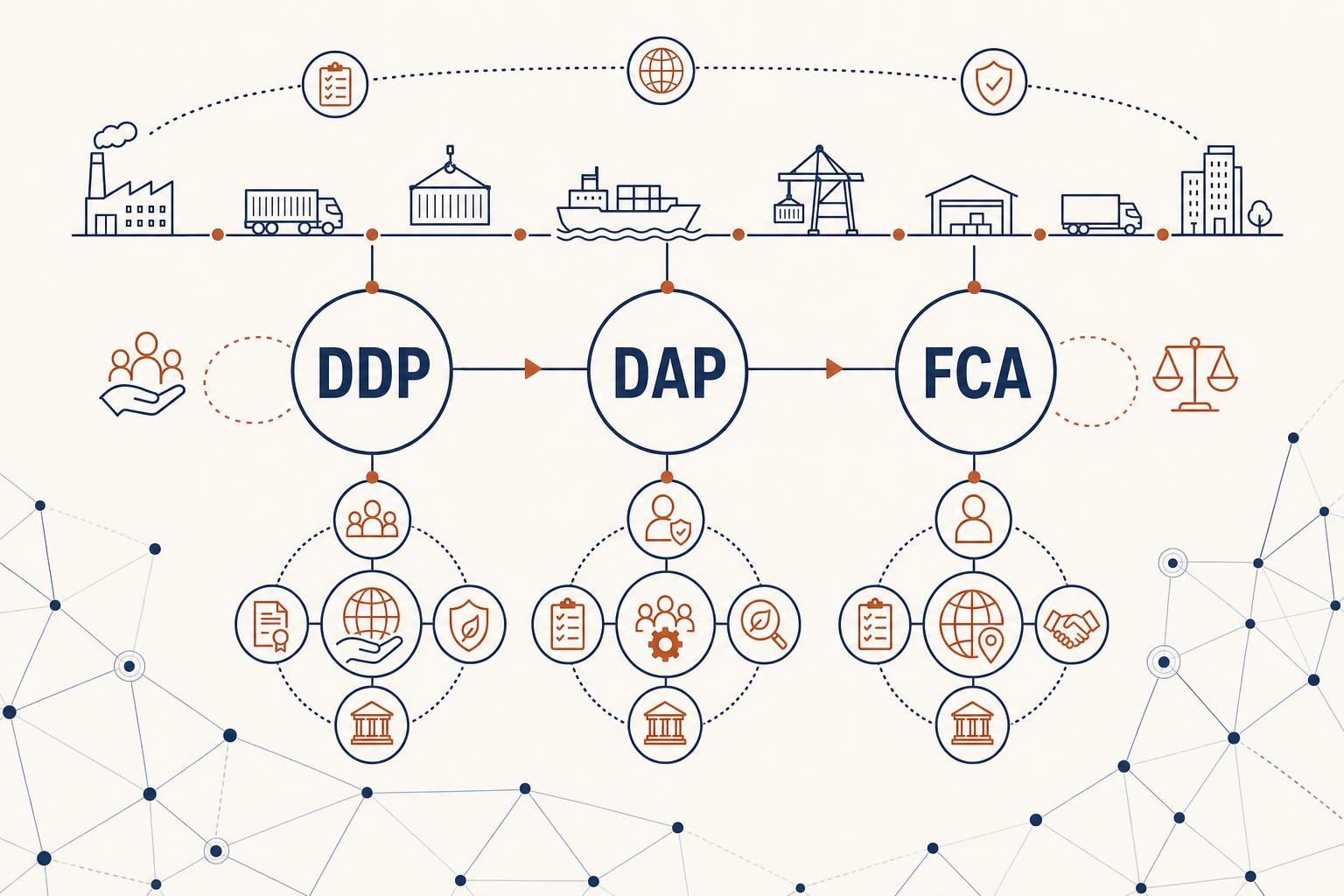
Three Letters, One Liability: How Your Incoterm Decides Who Pays CBAM
DDP, DAP, FCA - three letters in a contract determine who carries CBAM liability. A practical guide for procurement, trade compliance and legal teams on both sides of an EU import deal.