The CSDDD Guidelines Are Where Compliance Is Actually Decided - Here's What to Build Before Q1 2027
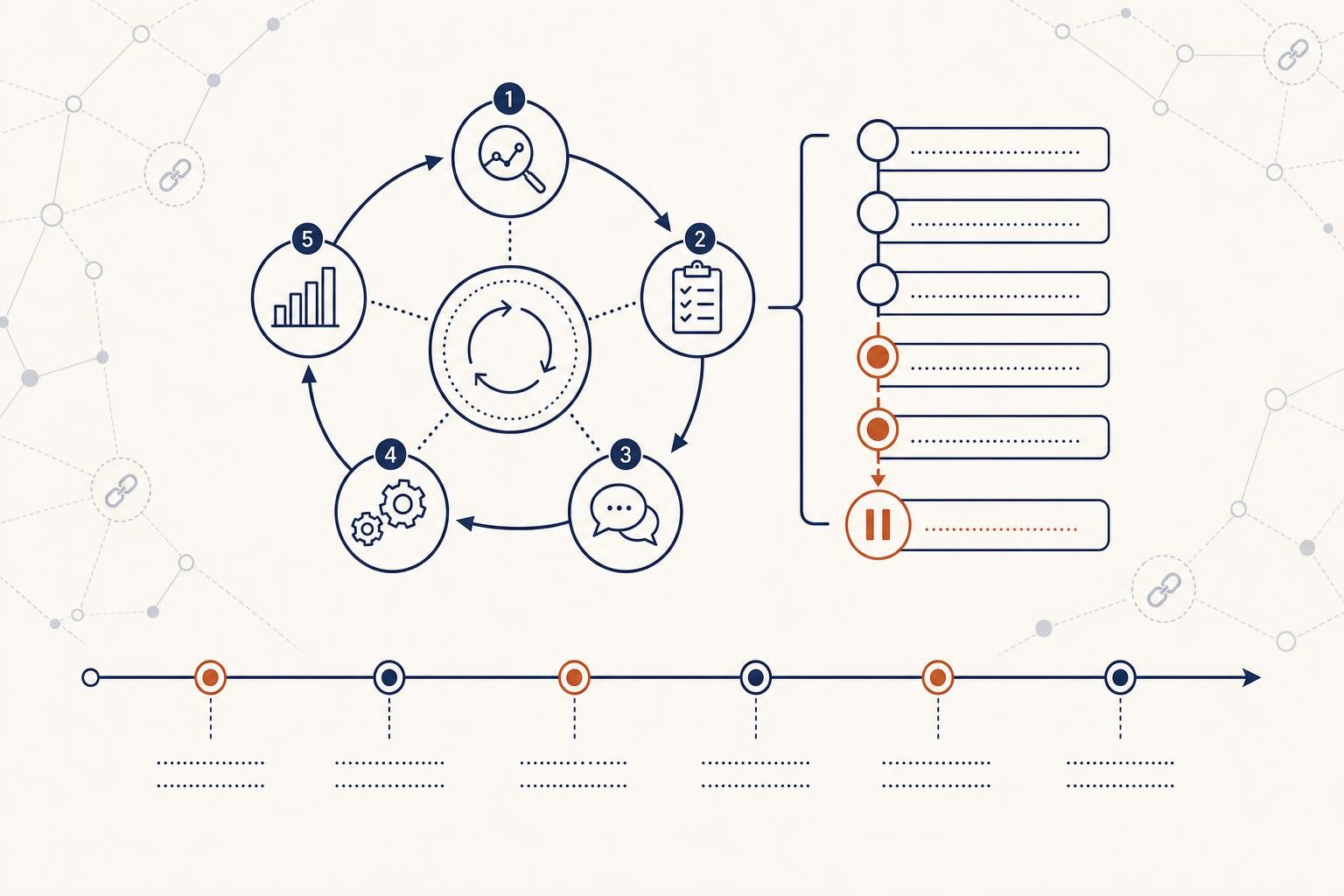
Most compliance teams are watching the CSDDD directive text. The Commission's implementation guidelines deserve at least as much attention - arguably more. The directive tells companies what they must do. The guidelines will tell supervisory authorities, and ultimately courts, how well a company must do it. That distinction is where enforcement exposure actually lives.
The European Commission ran an open public consultation on CSDDD implementation guidelines from 12 June to 14 August 2026. The consultation has now closed. Commission adoption of the guidelines is planned for Q1 2027, ahead of the legal deadline of 26 July 2027. That puts the guidelines roughly a year before member states must transpose the directive (26 July 2028) and two years before obligations apply to in-scope companies (26 July 2029). The preparation window is deliberately front-loaded. Companies that wait for national law will be building their programmes against a standard that was settled without their input.
This post focuses on what the guidelines must cover, what the consultation's shape reveals about the Commission's thinking, and what compliance teams should build now - before the text is finalised.
Why the Guidelines Matter More Than the Directive Text
The CSDDD is a conduct directive. It imposes legal obligations to identify, prevent, mitigate, bring to an end, and remediate actual and potential adverse human rights and environmental impacts. But the directive is deliberately principles-based. It does not specify, for example, how many suppliers must be assessed before a prioritisation decision is defensible, what documentation is required to demonstrate that an enhanced prevention action plan has a "reasonable expectation of success," or which data sources are acceptable for a given geography or sector.
Those questions are left to the guidelines. Implementation guidelines, currently developed by the European Commission, will be critical to ensure companies apply the rules in a meaningful and sufficiently uniform manner. When a supervisory authority investigates whether a company discharged its due diligence duty, it will reach for the guidelines first. When a company defends its process, it will point to the guidelines to show it met the expected standard. The directive sets the duty; the guidelines set the evidentiary bar.
The guidelines will be non-binding, but they are expected to carry significant practical weight. "Non-binding" is a legal term of art. In practice, a company that departs from Commission guidance without documented justification is taking a risk that most supervisory authorities will not reward.
The Six Mandated Guideline Areas - and What Remains Unresolved
By 26 July 2027, the Commission must adopt guidelines covering: the due diligence process (risk identification and prioritisation, appropriate measures, and responsible disengagement), stakeholder engagement, available data sources, digital tools and technologies, model contractual clauses, and assessment of relevant risk factors. A second wave of guidelines - covering information-sharing, trade secret protection, protection from retaliation, and guidance for stakeholders - is due by 26 July 2028.
Here is what is genuinely open in each first-wave area:
1. Due diligence process (risk identification, prioritisation, appropriate measures, disengagement) The directive requires a risk-based approach. What it does not specify is the minimum analytical depth required before a company can conclude that a supplier relationship is low-risk and deprioritise it. The guidelines will need to address how much "reasonably available information" is enough - and what happens when a company gets that wrong.
2. Stakeholder engagement The Omnibus narrowed the definition of "stakeholders" (consumers are no longer in scope), but the engagement obligation remains substantive. The guidelines must clarify when engagement is required, with whom, and what a documented engagement process looks like. This is one of the most contested areas: civil society organisations, trade unions, Human Rights Watch, and UNICEF all filed submissions to the consultation, signalling that the guidelines on this topic will face scrutiny from multiple directions.
3. Available data sources Risk factor assessment guidance relates to the assessment of company-level, business operations, geographic and contextual, product and service, and sectoral risk factors, including those associated with conflict-affected and high-risk areas. Data sources and digital tools guidance relates to data, information sources, digital tools and technologies that could facilitate and support compliance. Which sources are acceptable - and which are not sufficient on their own - is entirely open. A company relying solely on a commercial risk-rating index for a high-risk geography may find that the guidelines set a higher bar.
4. Digital tools and technologies In the consultation, the Commission gave digital tools a section of their own. It asked which tools help companies identify, monitor, and assess adverse impacts, what difficulties and unnecessary burdens they cause, and whether more tools are needed at all. Accountancy Europe's consultation submission captured the core tension: technology evolves rapidly, so guidelines should guide effective tool use, not specify which tools to use. The guidelines should explain how companies should select, govern and use digital tools effectively. There is no one-size-fits-all solution, as appropriate tools depend on the value chain, sector, geography and sustainability issues. Whether the Commission adopts that flexible approach or sets more prescriptive criteria is unresolved.
5. Model contractual clauses The consultation asks how the model contractual clauses should allocate tasks and costs between in-scope companies and their business partners, including in cross-border settings. This is directly relevant to the trickle-down burden on SME suppliers - a theme the Commission flagged explicitly in the questionnaire.
6. Assessment of relevant risk factors Whether the guidelines define the factors for determining fines and address the interplay between regulatory enforcement and civil liability under national law will be watched closely by companies assessing their CSDDD risk exposure. The risk factor guidance will also need to address how companies weight geographic, sectoral, and product-level indicators against each other - a methodological question the directive leaves entirely open.
The Disengagement Rewrite: Why "Suspend Plus Plan" Is Harder to Evidence Than Termination
This is the Omnibus change that deserves the most careful operational attention, and it is one the guidelines must resolve.
Under the original CSDDD, companies were required - as a last resort - to terminate a business relationship where a severe adverse impact could not be prevented or remediated. The Omnibus removed that obligation. In-scope companies are no longer required to terminate, as a last resort, their business relationships with business partners where adverse impacts have arisen, though complex suspension rules will still apply. If there is a "reasonable expectation" that a company's enhanced prevention or corrective action plan will succeed, the mere fact of continuing to engage with the specific business partner will not expose the company to penalties or civil liability.
The Omnibus removes the explicit obligation to responsibly disengage from business partners as a last resort in cases of severe potential and actual impacts and now explicitly only requires responsible suspension. The full sequence, as it now stands: if impacts cannot be prevented, adequately mitigated, ended or minimised, companies must - as a last resort and until the impact is addressed - refrain from entering into or extending relationships linked to the impact, suspend the relationship for the activities concerned including using leverage, and adopt an enhanced prevention or corrective action plan where such efforts are reasonably expected to succeed. Before suspending, companies must assess whether suspension would cause manifestly more severe impacts; if so, suspension is not required but reasons must be reportable to national authorities. If suspending, companies must mitigate suspension impacts, give reasonable notice and keep the decision under review. If not suspending, they must monitor the impact and periodically reassess measures.
This is a shift from disengagement to engagement - and it is, in one important sense, more demanding than the old rule. Termination is a binary act that generates a clear paper trail. Suspension plus an enhanced prevention action plan is an ongoing state that requires continuous documentation: evidence that the plan exists, that it is being implemented, that it has a genuine basis for the "reasonable expectation of success" assessment, and that the company is keeping the decision under review.
The guidelines must define what "reasonable expectation of success" requires in evidence. Until they do, companies face a genuine gap: the legal standard exists, but the evidentiary standard does not. A defensible file for a suspended relationship will need, at minimum: a written assessment of why termination was not pursued, a documented basis for the "reasonable expectation" conclusion (supplier capacity, track record, third-party verification), the enhanced prevention action plan itself with milestones and owners, and a review schedule with dated entries.
The suspension-plus-plan pathway is not a softer option than termination — it is a more evidence-intensive one. A company that suspends a relationship and then fails to document the enhanced prevention action plan, or fails to keep the decision under review, may be in a worse position than one that terminated cleanly. Build the file from day one of any suspension decision.
What the Consultation's Shape Tells Us
The consultation questionnaire ran from identifying adverse impacts through to digital tools and SME safeguards. The consultation questionnaire covers a broad range of themes, from identifying adverse impacts to use of digital tools and safeguards for small- and medium-sized enterprises. The breadth of the questionnaire is itself informative: the Commission is not treating any of these areas as settled.
Two tensions are worth flagging.
Risk-based flexibility versus stakeholder demands for prescriptiveness. The directive's risk-based approach gives companies discretion to focus resources where impacts are most severe and likely. Civil society organisations, trade unions, Human Rights Watch, and UNICEF all submitted to the consultation. UNICEF's submission highlights the need for companies to explicitly consider children's rights throughout the due diligence process and to identify, prevent, mitigate and remediate adverse impacts on children across their operations, value chains, products, services and digital environments. Trade union submissions recommend the guidelines strengthen meaningful trade union engagement, recognise freedom of association and collective bargaining as enabling rights, and promote effective, worker-centred human rights due diligence. These submissions are pushing for specificity and prescription. The Commission will need to balance that against the flexibility that makes a risk-based approach workable for large companies with complex supply chains.
SME trickle-down burden. The consultation invites submissions on a range of other issues that, depending on industry and a company's position in the value chain, may also be of interest. These include: challenges of defining "living wage," specific issues for small and medium-sized enterprises, the challenges of sharing information and data with business partners, and stakeholder engagement. The SME safeguard question is not about in-scope companies - they are, by definition, very large. It is about the burden that in-scope companies' due diligence requests place on their SME suppliers. How the guidelines address proportionality in contractual clauses and data requests will determine whether the directive's compliance burden is concentrated at the top of supply chains or distributed across them.
What to Build Before Q1 2027
The guidelines are not yet published. But the areas they must cover are fixed by the directive, and the consultation has signalled the Commission's priorities. The following are no-regret moves - investments that will be useful whatever the guidelines ultimately say.
Decision records for prioritisation. The risk-based approach requires companies to prioritise which impacts to address first. That prioritisation decision needs to be documented: what information was used, what methodology was applied, what was deprioritised and why. Build a template now. The guidelines will almost certainly require evidence of a structured prioritisation process; a company that has been running one for two years will be in a materially better position than one that starts after publication.
An escalation ladder that ends in suspension, not exit. Redesign your supplier escalation process to reflect the Omnibus rewrite. The ladder should have defined trigger points, documented intermediate steps (contractual assurances, capacity-building, audit), a suspension decision gate with the "reasonable expectation" assessment built in, and a review cadence. The old ladder that ended in termination is no longer the right model.
Stakeholder engagement logs. Whatever the guidelines say about who must be engaged and when, they will require evidence that engagement happened. A structured log - date, stakeholder, method, issues raised, response - is the minimum. Start now, even if the scope of required engagement is later narrowed.
A data-source inventory. Map the data sources your teams currently use for risk identification: commercial indices, government watchlists, NGO reports, audit results, supplier self-assessments. When the guidelines specify acceptable sources, you will need to assess gaps quickly. A pre-existing inventory makes that assessment a matter of hours, not weeks.
None of these investments depend on knowing the final guideline text. They are the kind of structured, documented process that any defensible due diligence programme requires - and that the guidelines, whatever their precise content, will reward.
The Timeline in Brief
| Date | Event |
|---|---|
| 14 August 2026 | Public consultation closed |
| Q1 2027 | Commission adoption of guidelines (planned) |
| 26 July 2027 | Legal deadline for first-wave guidelines |
| 26 July 2028 | Member state transposition deadline; second-wave guidelines due |
| 26 July 2029 | CSDDD applies to in-scope companies |
The preparation window is real. Guidelines land roughly a year before national law and two years before obligations bite. Companies that treat Q1 2027 as a starting gun rather than a checkpoint will be building their programmes under time pressure, against a standard that was already settled without their input.
The consultation is closed. The drafting is underway. The time to build is now.
Related reading
The CBAM Verifier Bottleneck: Why Booking a Slot in Late 2026 Is the Real Compliance Decision
Verifier availability - not data quality - is the binding constraint on using actual embedded emissions for 2026 CBAM imports. Here's the arithmetic, the third-country gap, and what to do in Q4 2026.
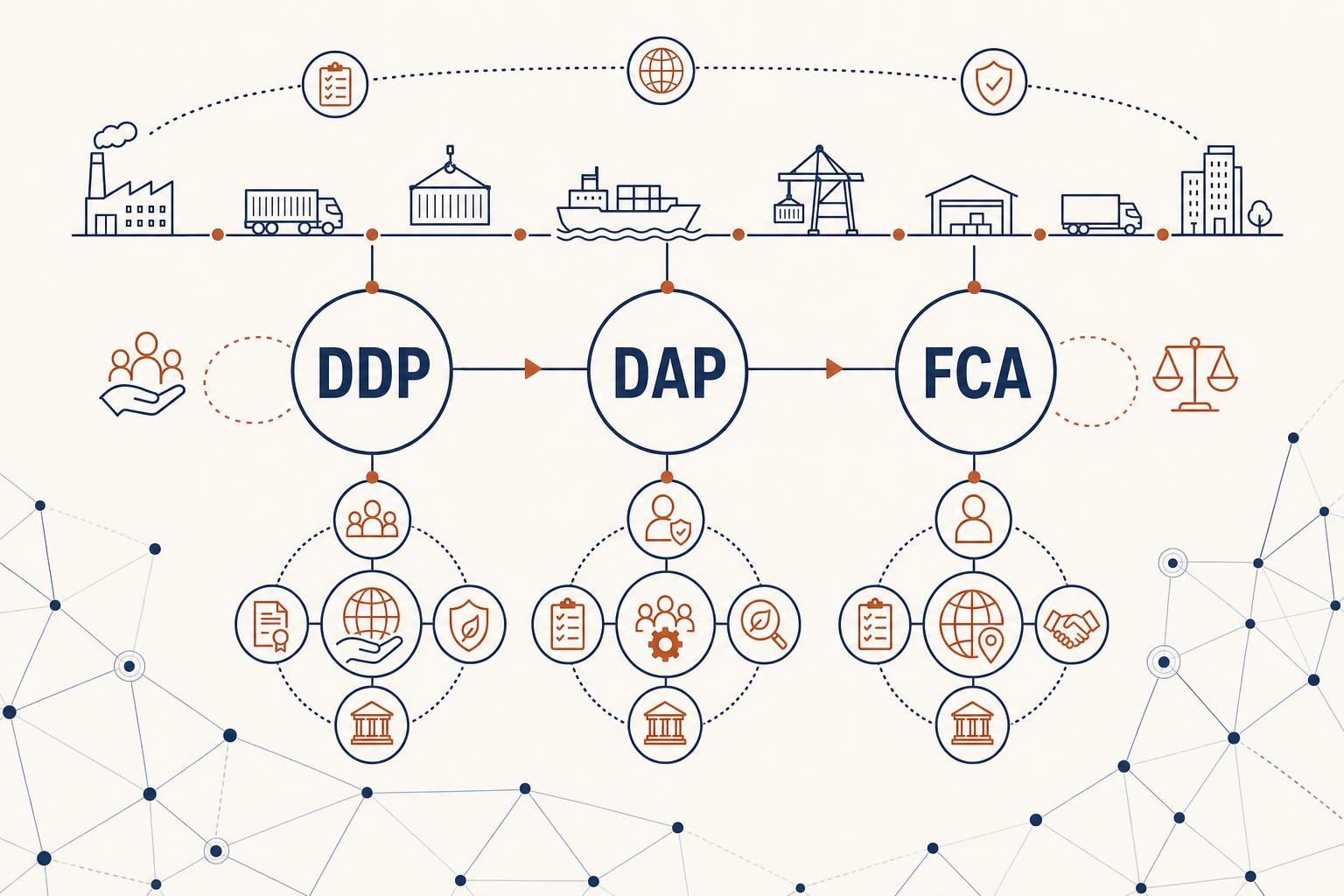
Three Letters, One Liability: How Your Incoterm Decides Who Pays CBAM
DDP, DAP, FCA - three letters in a contract determine who carries CBAM liability. A practical guide for procurement, trade compliance and legal teams on both sides of an EU import deal.
Asking Suppliers for Data Under CSDDD: What the Omnibus Limits on Information Requests Mean in Practice
After Omnibus I, CSDDD companies can no longer send every supplier the same long questionnaire. Here is what the necessity and proportionality limits mean, and how to redesign your supplier data requests.