CBAM for Non-EU Exporters: Your Plain-English Guide to Supplier Data, Templates & Verification
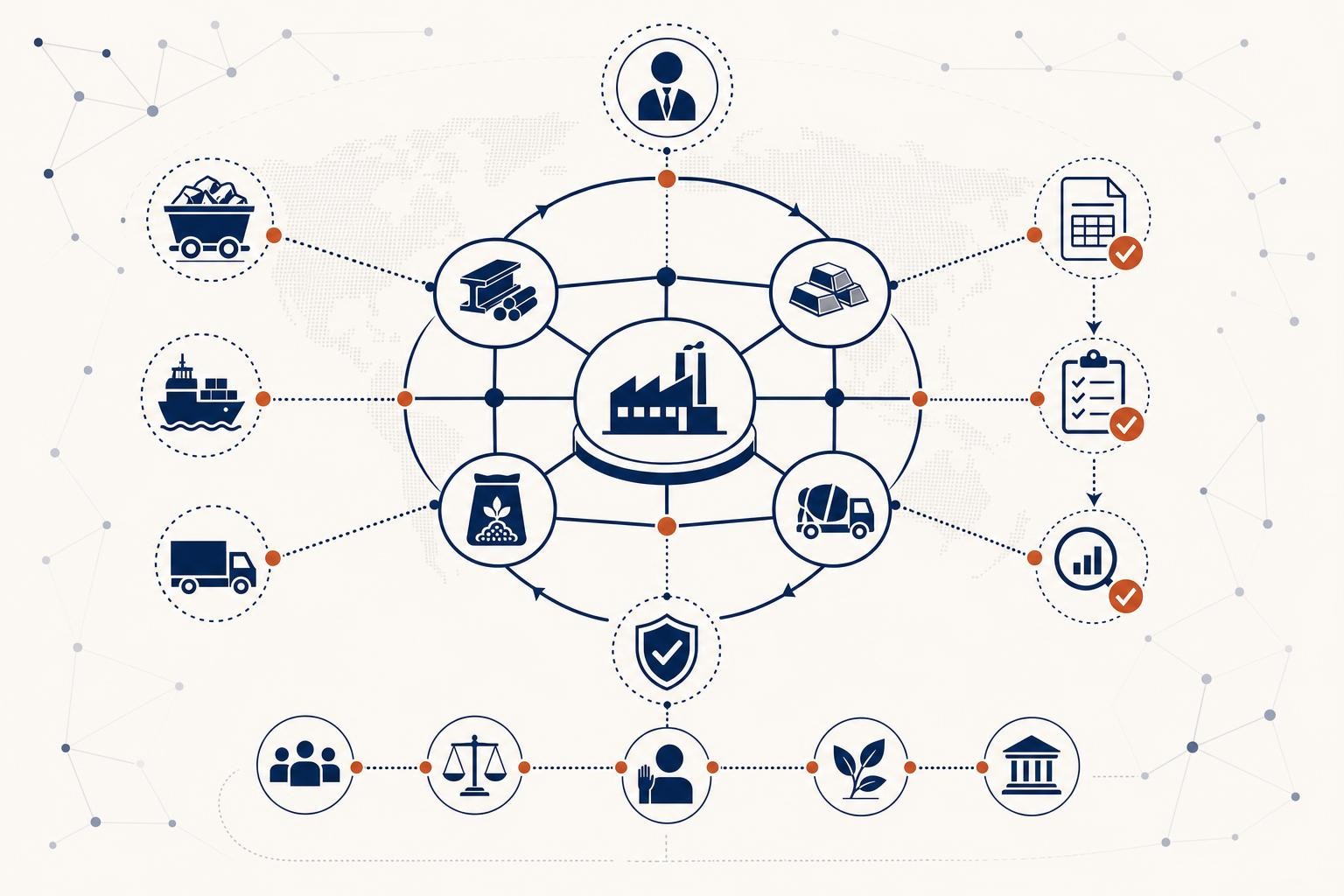
Your EU customer just emailed asking for your "CBAM emissions data." You're a steel mill in India, an aluminium smelter in Türkiye, or a cement producer in Egypt - and the regulation they're referring to doesn't technically apply to you. So why does it feel like it does?
Because in practice, it does. The EU's Carbon Border Adjustment Mechanism (CBAM) puts a carbon price on imports of steel, aluminium, cement, fertilisers, electricity and hydrogen. Non-EU suppliers are not directly regulated by CBAM, but they play a critical role in helping EU importers comply - importers cannot measure emissions themselves; they rely on suppliers to provide detailed, accurate data on the embedded emissions of the goods being exported.
Suppliers who provide clean, verified data become easier and cheaper to buy from. Suppliers who can't are quietly replaced. This guide tells you exactly what to do.
Why This Matters to You Right Now
After a transitional three-year reporting-only phase, CBAM's financial obligations took effect on 1 January 2026. That means every tonne of covered goods your EU customer imports now creates a real certificate cost - not just a paperwork exercise.
EU importers must surrender CBAM certificates via the CBAM registry by 30 September of each year, starting for the first time in 2027 for the year 2026. That deadline is closer than it looks: since facilities cannot calculate their 2026 emissions until year's end and importers must submit their 2026 CBAM data by September 2027, long verification queues seem likely. Your EU buyer needs your verified data well before that date - which means you need to start now.
The competitive stakes are real. CBAM is changing how buyers evaluate suppliers. Companies with poor emissions transparency may face procurement risks, pricing disadvantages, or even loss of contracts.
The Core Mechanic: Legal Obligation vs. Practical Dependency
If you are outside the EU and exporting iron & steel, aluminium, fertilisers, cement, hydrogen or electricity to the EU, your EU clients need your emissions data to comply with the EU CBAM under the threat of penalties.
The legal obligation sits entirely with the EU importer - they file the declaration, they buy and surrender the certificates. But non-EU producers, whilst not directly subject to CBAM obligations, are essential to effective CBAM compliance in practice. They must calculate embedded emissions using EU-prescribed methodologies and provide accurate, complete and verifiable emissions data to EU importers.
Think of it this way: your EU customer is legally responsible for the bill, but you hold the receipt.
The Default-Values Trap
If you don't provide actual emissions data, your EU buyer must fall back on EU default values. This is where it gets expensive - for them, and ultimately for you.
Importers without reliable emissions data must use country- and product-specific default values for calculating their CBAM liability. Default values will be increased by a 10% markup in 2026, rising to 30% by 2028, to encourage importers to use actual data instead of relying on the default values.
The default value markup is 10% in 2026, 20% in 2027, and 30% from 2028 onwards for steel, aluminium and cement - with a lower 1% cap for fertilisers.
For aluminium, cement, and iron & steel the mark-up increases from 10% in 2026 to 30% in 2028. Due to the difficulty of obtaining actual data across complex chemical supply chains, it is set at only 1% for fertiliser.
The defaults are also set conservatively. For Indonesia and India, very high defaults were confirmed in the EU's implementing regulations - meaning exporters from those countries who rely on defaults face a particularly steep cost penalty. Without verified data, importers are forced to rely on default values, which are typically set at the higher end of the emissions spectrum and will significantly increase your buyers' CBAM certificate costs. The bottom line: unverified data = higher costs for your EU buyers = lost competitiveness = potential loss of contracts.
If your EU buyer uses default values because you haven't provided actual data, they pay more — and they know it. That cost difference will show up in procurement decisions. Providing verified actual data is the single most effective thing a non-EU supplier can do to protect their EU contracts.
Step-by-Step: What You Need to Do
Check whether your goods fall under CBAM's six covered sectors: iron & steel, aluminium, cement, fertilisers, electricity, and hydrogen. If yes, identify which specific CN (commodity) codes apply to your exports and which production routes you use — for example, basic oxygen furnace vs. electric arc furnace for steel. The production route determines which emissions factors and benchmarks apply.
This is the technical core. Manufacturers exporting CBAM-covered goods must provide emissions data calculated using the EU's Monitoring and Reporting Regulation (MRR) methodology. Data must be reported at installation level — not corporate averages — and appropriately allocated to specific products and process units. You need to capture: - Direct emissions (Scope 1): fuel combustion, process emissions at your facility - Indirect emissions (Scope 2): electricity consumption, where applicable Generic ESG reports or lifecycle assessments based on industry averages do not meet CBAM's requirements. You need granular, installation-level measurements.
The European Commission has provided the CBAM Communication Template for Installations — a standardised Excel file available from the EU's CBAM guidance pages. It covers three main sections: - Summary of installation: name, address, economic activity, reporting period - Processes and production routes: the specific methods used to make your product - GHG emissions balance and specific embedded emissions: the calculated figures, broken down by direct and indirect emissions, allocated to each product Fill this out at the installation level for each facility that produces goods destined for the EU. Your EU customer plugs these figures directly into their annual CBAM declaration.
This is the step that unlocks the value of your actual data. CBAM declarants will only be permitted to report actual emissions data from their non-EU suppliers if it has been verified by an accredited verifier. For the first reporting period of the definitive CBAM application in 2026, each installation producing CBAM goods requires a physical site visit from an accredited verifier. The verifier must be independent from your installation and accredited under the EU's framework. Bodies such as SGS, Bureau Veritas, TÜV, and DNV are active in this space. Start early. Undergoing pre-verification during 2026 provides key benefits: errors and inconsistencies in emissions monitoring and reporting are detected, giving suppliers sufficient time to correct them, and the risk of having to fall back on less favourable default values is reduced.
Once verified, send your completed Communication Template — along with the verifier's statement — to your EU customer's sustainability or compliance team. They need this to file their annual CBAM declaration. From 1 January 2026, reporting shifts to an annual CBAM declaration, with the first annual report due by 30 September 2027. Give your customer enough lead time to review and upload the data — aim to have everything in their hands by Q2 2027 at the latest.
CBAM is a permanent, annual obligation. Set up a monitoring plan for your installation so that emissions data collection becomes a routine part of your operations — not a last-minute scramble. The CBAM factor (the share of the carbon cost that applies) ramps from 2.5% in 2026 to 100% by 2034, so the financial stakes for your EU customers will only grow.
What Goes in the Communication Template: A Quick Reference
| Section | What to provide | Notes |
|---|---|---|
| Installation summary | Name, address, country, economic activity code | One row per production facility |
| Installation summary | Reporting period start and end dates | Calendar year (1 Jan – 31 Dec) |
| Production routes | Production process description (e.g. BF-BOF, EAF for steel) | Determines which benchmark applies |
| Production routes | Quantity of goods produced (tonnes) | Per product / CN code |
| GHG emissions balance | Total direct emissions (tCO₂e) | Scope 1 — fuel combustion + process |
| GHG emissions balance | Total indirect emissions (tCO₂e) | Scope 2 — electricity, where applicable |
| GHG emissions balance | Specific embedded emissions (tCO₂e per tonne of product) | The key figure your EU customer uses |
| Verification | Verifier name, accreditation body, verification statement reference | Required from 2026 onwards for actual data |
How to Find and Engage an Accredited Verifier
Verifiers must be officially approved and registered, independent from the installations they verify, and have technical expertise in emissions monitoring and industry-specific processes.
Practical steps to find one:
- Search for bodies accredited under ISO 14065 (greenhouse gas validation and verification) in your country.
- Check whether your national accreditation body (e.g. NABCB in India, TÜRKAK in Türkiye, EGAC in Egypt) has issued CBAM-specific accreditations.
- Ask your EU customer - they may already have a preferred verifier they work with across their supply chain.
- Large international certification bodies (SGS, Bureau Veritas, TÜV Rheinland, DNV) operate globally and are actively building CBAM verification practices.
Engaging pre-verification services helps identify data gaps, establish monitoring methodologies, and ensure your documentation meets standards before the official verification begins.
The Interactive Checklist: Are You Ready?
Use this tool to assess your current readiness and identify the gaps you need to close before your EU customer's 30 September 2027 deadline.
The Bottom Line for Non-EU Exporters
CBAM doesn't put a legal obligation on you - but it puts a commercial one. You can choose between EU default values or actual supplier data. While there's no legal obligation to use supplier data, there is a strong economic incentive: default values include a mark-up, which means your buyer will need to purchase more certificates compared to using actual supplier data.
The first annual CBAM declaration covering 2026 imports is due by 30 September 2027, meaning EU importers need verified supplier data well before that date.
The suppliers who move first - who build a monitoring plan, fill the Communication Template, and get verified in 2026 - will be the ones their EU customers keep buying from as the carbon cost ramps toward 2034. The ones who wait will find themselves competing on price against a default-value penalty they didn't create.
Related reading
The UK-EU ETS Linkage Negotiation: What It Means for CBAM Exemption - and When
UK goods entering the EU face CBAM charges today - with no carve-out. The only route to exemption runs through ETS linkage. Here's the state of that negotiation, what it would actually change, and how to plan under uncertainty.
CBAM's Missing Half: What the Temporary Decarbonisation Fund Means for EU Exporters
CBAM equalises carbon costs on imports but leaves EU exporters exposed as free allocation disappears. This post explains the export carbon leakage gap, the proposed Temporary Decarbonisation Fund, and what exporters should do now.
CBAM and Customs Special Procedures: Why Inward Processing Defers Your Obligation, Not Cancels It
Inward processing doesn't exempt you from CBAM - it defers it. Here's exactly when the obligation triggers, what data you need to hold, and who must be the authorised declarant.