CBAM's Expanding Net: What Downstream Importers Need to Know About the Proposed Scope Extension
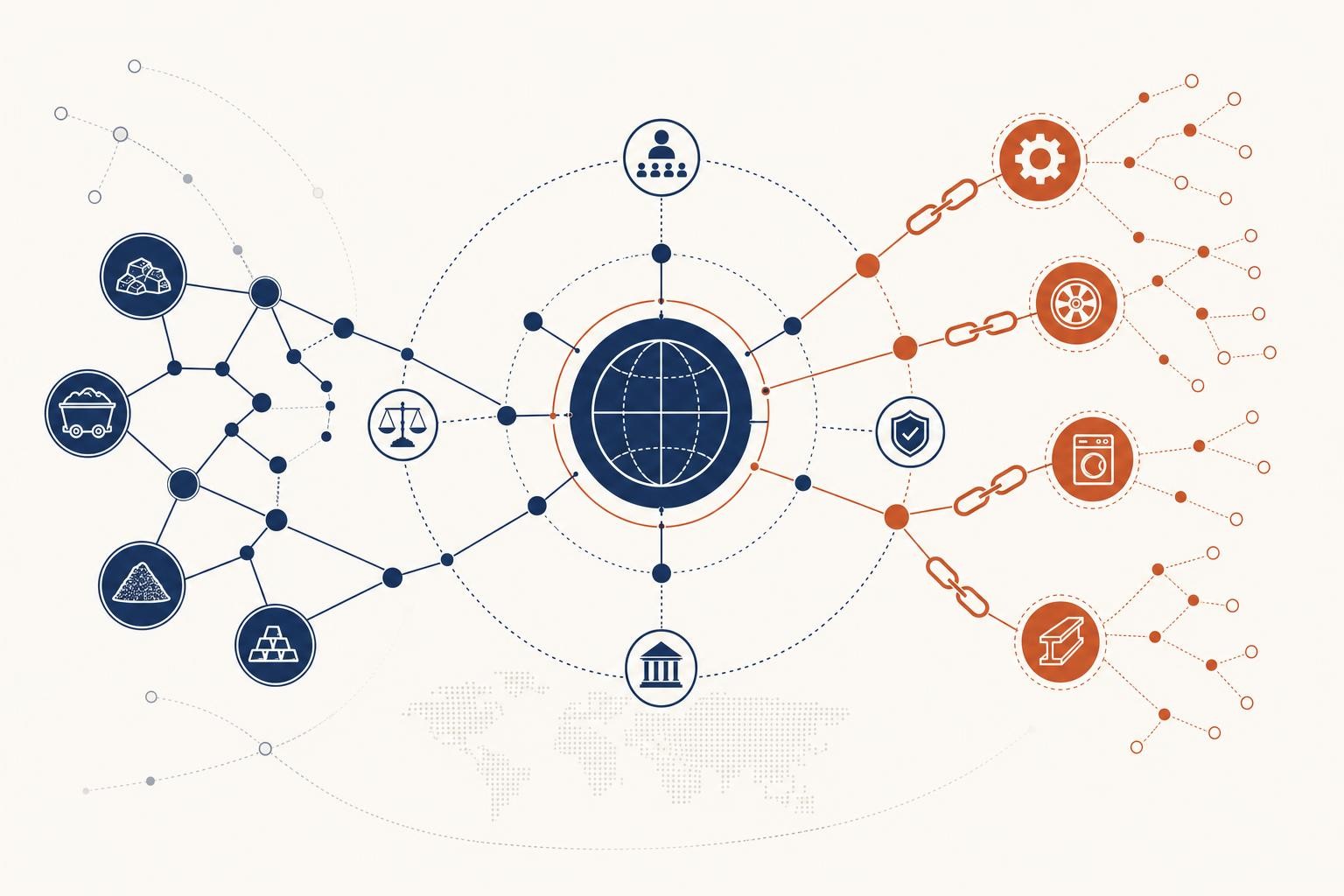
You import finished goods made from steel or aluminium - machinery, vehicle components, domestic appliances, construction equipment, metal fabrications. Today, CBAM is not your problem. But the EU has made clear that it intends to change that, and the legislative machinery is already moving.
This post is about what's coming next: a proposed extension of CBAM to roughly 180 downstream products, a two-step roadmap that reaches further still, and what you should be doing right now - even though the rules aren't final yet.
Where CBAM Stands Today
CBAM currently covers six sectors: iron and steel, aluminium, cement, fertilisers, hydrogen, and electricity. Since 1 January 2026, importers of those goods above the 50-tonne annual threshold must hold authorised CBAM declarant status, track embedded emissions, and ultimately surrender CBAM certificates for the carbon embedded in their imports.
If your products sit downstream of those raw materials - you buy steel-intensive machinery, not raw steel billets - you are not in scope today. But the Commission has been explicit: that gap is a carbon leakage risk, and it intends to close it.
The December 2025 Proposal: 180 New Products from 2028
On 17 December 2025, the European Commission published a legislative proposal (COM 2025/0419) to extend CBAM to approximately 180 additional downstream products, with implementation proposed to begin on 1 January 2028. The proposal was published alongside the implementing acts that made the existing definitive regime operational - a clear signal that the Commission sees downstream expansion as the logical next step, not a distant aspiration.
The proposal must still go through the EU's ordinary legislative procedure - negotiations between the Council and the European Parliament - so details will change. But the direction of travel is unambiguous. In June 2026, EU member states agreed a general approach on the proposal, with the Council's position going further than the Commission's original text by adding additional metal-intensive industrial, construction, machinery and electrical-equipment products. The European Parliament is expected to adopt its position in September 2026, after which trilogue negotiations begin.
Why downstream products? The carbon leakage logic
The problem the Commission is solving is straightforward. CBAM prices the carbon in imported raw steel and aluminium. But a manufacturer in a third country can buy that raw steel cheaply (without a carbon cost), fabricate it into a finished product - a gearbox, a radiator, a washing machine - and export the finished good to the EU without any CBAM obligation. The carbon leakage risk simply shifts one step down the value chain.
The Commission's proposal follows directly from the EU Steel and Metals Action Plan of March 2025, which flagged the risk that carbon leakage in CBAM-covered goods could shift further downstream.
Which sectors would be pulled in?
The 180 proposed products are overwhelmingly intermediate industrial goods. According to the Commission's own Q&A, the sectors most affected would include machinery, hardware and fabrications, vehicle parts, domestic appliances, and construction equipment.
The overwhelming majority (94%) of the additional downstream products are intermediate industrial goods with a substantial steel and aluminium share (on average 79%), typically used in heavy machinery and specialised equipment - for example, base metal fittings, cylinders, industrial radiators, or casting machines. Only around 6% are household goods.
Specific examples include:
- Vehicle components: gearboxes, chassis, wheels, certain engines, and cargo vehicles (passenger cars remain excluded as finished products)
- Industrial equipment: industrial robots, power transformers, casting machines, industrial radiators
- Domestic appliances: washing machines, refrigerators
- Construction and hardware: cables, fasteners, fittings, furniture components, farming machinery
Goods containing steel or aluminium as functional components - not just those made entirely of these metals - would also be in scope, such as fasteners, fittings, furniture components, and electrical cables.
The expansion is expected to bring an additional 7,500 importers into compliance scope. If you currently import any of the product categories above, you could be among them. The time to start mapping your exposure is now — not when the regulation is finalised.
How would embedded emissions work for downstream goods?
This is a critical practical point. Only emissions embedded in the input materials (precursors) used to make the downstream goods will be subject to CBAM - emissions from downstream processing or assembly will not be taken into account.
To illustrate: car doors manufactured outside the EU would attract CBAM obligations for the emissions embedded in the steel plates used in their construction, but not for the fabrication of those plates into parts or their assembly. This limits the compliance burden somewhat, but it still requires importers to trace the steel or aluminium content of their goods back to the production installation - which means engaging suppliers early.
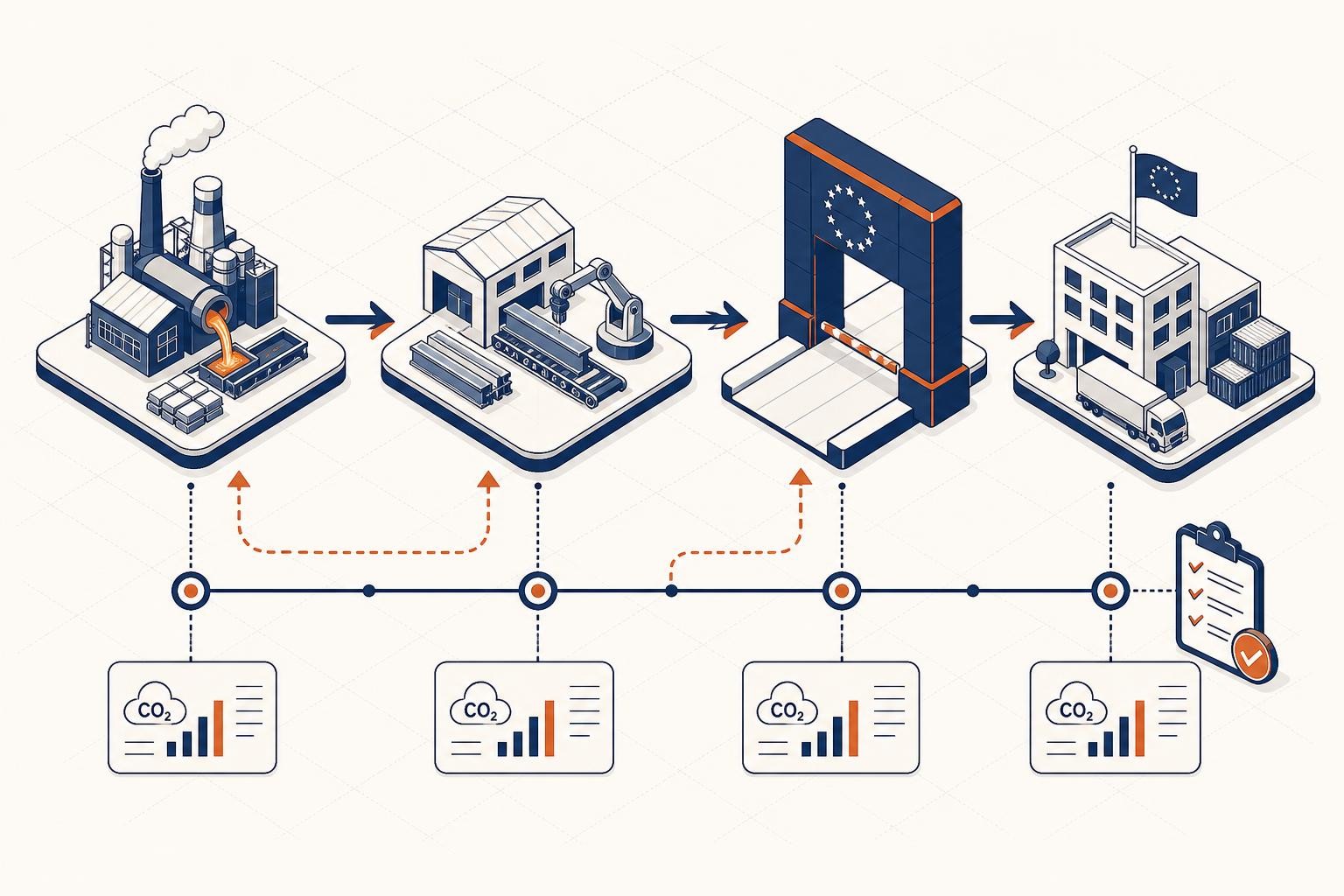
The Two-Step Roadmap: It Doesn't Stop at 2028
The downstream extension is only Step 1 of a broader Commission roadmap. Understanding Step 2 matters just as much for horizon-scanning.
The December 2025 legislative package: extend CBAM to ~180 steel- and aluminium-intensive downstream products (proposed implementation 1 January 2028), strengthen anti-circumvention rules, refine electricity emissions calculations, and establish a Temporary Decarbonisation Fund. An implementing act on deducting carbon prices paid in third countries is also due in 2026.
The Commission will evaluate extending CBAM further: (i) to indirect emissions from existing CBAM goods (iron and steel, aluminium, and hydrogen), and (ii) to additional sectors — including chemicals. A potential extension to downstream products related to cement, fertilisers, and hydrogen is also under consideration for a future legislative revision.
The Commission must present its first biennial report to the European Parliament and Council on CBAM's implementation and functioning — including options for further scope extension. Subsequent reports follow every two years. This report will be the formal trigger for the next wave of legislative proposals.
By 31 December 2027, the Commission is required to present its first biennial report to the European Parliament and the Council on the implementation and functioning of CBAM, with subsequent reports every two years thereafter. That report will explicitly assess further scope extension - including to chemicals and indirect emissions. If you import chemical products or other carbon-intensive goods not currently covered, this is the timeline to watch.
What This Means for Your Product Portfolio
The practical question for any downstream importer is: which of my products could fall in scope, and when?
The answer depends on two things: the CN (Combined Nomenclature) code of your goods, and their steel or aluminium content. The Commission's proposed Annex lists specific CN codes. If your products sit in machinery, vehicle components, appliances, or metal fabrications, there is a meaningful chance some of them appear on that list.
Use the widget below to get a quick sense of your exposure by sector:
The Legislative Timeline at a Glance
| Date / Period | Event | Status |
|---|---|---|
| 17 December 2025 | Commission publishes legislative proposal COM 2025/0419 to extend CBAM to ~180 downstream products | ✅ Done |
| 12 June 2026 | EU Council adopts general approach (going further than Commission proposal) | ✅ Done |
| September 2026 (expected) | European Parliament expected to adopt its position | ⏳ Pending |
| 2026–2027 | Trilogue negotiations between Council, Parliament and Commission | ⏳ Pending |
| 1 January 2028 (proposed) | Downstream scope extension enters into force (if adopted) | 📋 Proposed |
| By 31 December 2027 | Commission presents first biennial CBAM report — including options for further scope extension to chemicals and indirect emissions | 📋 Planned |
| From 2027 onward | Step 2 assessment: indirect emissions from steel, aluminium, hydrogen; potential new sectors including chemicals | 📋 Planned |
What to Do Now: A Practical Checklist for Downstream Importers
The proposal is still legislative - it will be amended before it becomes law. But waiting for the final text before acting is a mistake. The Council's general approach in June 2026 shows that member states are, if anything, pushing for a broader scope than the Commission originally proposed. The direction of travel is clear.
Here is what compliance and procurement leads should be doing in the next 12 months:
1. Map your product portfolio against the proposed CN codes. The Commission's draft Annex to COM 2025/0419 lists the specific CN codes proposed for inclusion. Cross-reference your import declarations against that list now. Even if some codes change in trilogue, you'll identify your highest-risk products.
2. Identify the steel and aluminium content of your goods. For downstream products, CBAM liability will be calculated on the embedded emissions of the steel and aluminium precursors - not the whole product. You need to know what proportion of each product is steel or aluminium, and where that material was produced.
3. Engage your non-EU suppliers early. Suppliers will need to provide installation-level emissions data for the steel and aluminium inputs they use. This is a new ask for most manufacturers outside the EU. The earlier you raise it, the more time they have to set up monitoring systems. Suppliers who cannot provide actual data will push you onto default values - which carry a 30% mark-up from 2028 onward.
4. Watch the legislative timeline. The Parliament's position (expected September 2026) and the subsequent trilogue will determine the final product list and implementation date. Subscribe to a reliable update source so you don't miss material changes.
5. Factor CBAM into procurement contracts. If you are negotiating multi-year supply agreements now, consider including a CBAM clause that allocates responsibility for emissions data and any resulting cost. Contracts signed today without such a clause could create disputes in 2028.
Not sure if your products are on the proposed list? The Commission's full draft Annex of CN codes is published alongside COM 2025/0419 on EUR-Lex. Search for your CN codes there — it's the most authoritative source, and it's free.
The Bottom Line
CBAM today is a raw-materials levy. CBAM in 2028 - if the proposal is adopted broadly as proposed - becomes a finished-goods levy for a wide swathe of steel- and aluminium-intensive manufacturing. And the Commission's two-step roadmap signals that even 2028 is not the end point: chemicals, indirect emissions, and further sectors are all on the table for the decade ahead.
The companies that will handle this best are the ones that start mapping their exposure now, build supplier relationships around emissions data, and treat CBAM as a permanent feature of EU trade - not a one-off compliance project. The net is widening. The question is whether you're ready when it reaches you.
Related reading
The UK-EU ETS Linkage Negotiation: What It Means for CBAM Exemption - and When
UK goods entering the EU face CBAM charges today - with no carve-out. The only route to exemption runs through ETS linkage. Here's the state of that negotiation, what it would actually change, and how to plan under uncertainty.
CBAM's Missing Half: What the Temporary Decarbonisation Fund Means for EU Exporters
CBAM equalises carbon costs on imports but leaves EU exporters exposed as free allocation disappears. This post explains the export carbon leakage gap, the proposed Temporary Decarbonisation Fund, and what exporters should do now.
CBAM and Customs Special Procedures: Why Inward Processing Defers Your Obligation, Not Cancels It
Inward processing doesn't exempt you from CBAM - it defers it. Here's exactly when the obligation triggers, what data you need to hold, and who must be the authorised declarant.